Great Himalayas Trek

Where Altitude Meets Elegance

info@greathimalayastrek.com
Adventure Awaits

Everest Three Passes Trek

Everest Region
2 Reviews

Starting From

$1990 / person
Large Image
Image 1
Image 2
Best Price $1,890.50
Duration 21 Days
Location Everest Region
Best Season March/May To Sep/Nov
Difficulty Level Challenging
Max Altitude 5545m
Activity Trekking
Transportation Jeep/Flight

Overview

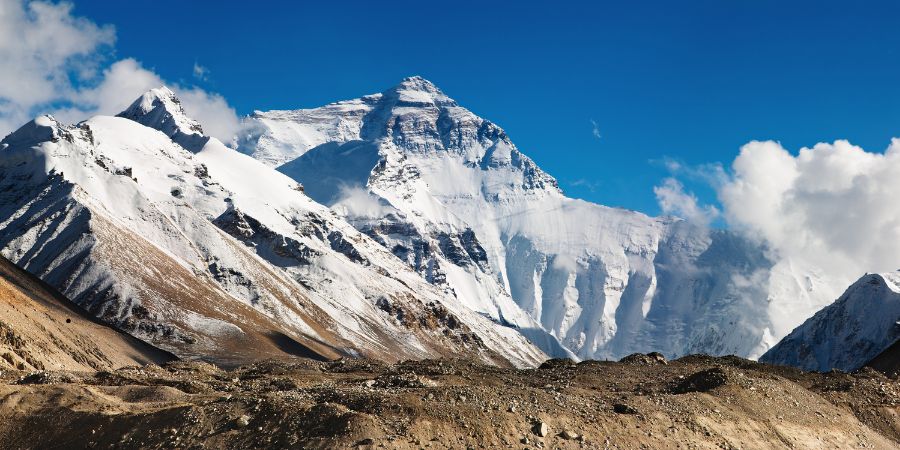
The Everest Three Passes Trek is a thrilling and challenging adventure in the heart of the Himalayas, designed for experienced trekkers seeking the ultimate trekking experience. This trek combines high-altitude challenges, stunning mountain scenery, and immersion in the rich culture of the Everest region. It is considered one of the most difficult treks in Nepal, traversing three high passes—Kongma La (5,535 m/18,159 ft), Cho La (5,368 m/17,612 ft), and Renjo La (5,360 m/17,585 ft)—which connect the four valleys of Imja Tse, Khumbu, Gokyo, and Bhotekoshi. The journey also includes visits to iconic destinations such as Everest Base Camp and some of the highest viewpoints in the region, including Kala Patthar (5,550 m/18,209 ft) and Gokyo Ri (5,357 m/17,575 ft). The trek offers awe-inspiring panoramic views of some of the world’s highest peaks, including Mount Everest (8,848.86 m / 29,031.69 ft), Lhotse (8,516 m/27,940 ft), Cho Oyu (8,201 m/26,906 ft), Makalu (8,463 m/27,766 ft), Nuptse (7,855 m/25,771 ft), and Ama Dablam (6,814 m/22,356 ft). The dramatic landscapes of glaciers, high-altitude lakes, and rocky trails complement these vistas.

In addition to its natural beauty, the trek offers a glimpse into the unique Sherpa culture. Along the trail, trekkers will pass through traditional highland villages and visit monasteries like the famous Tengboche Monastery, experiencing the region's deep spiritual and cultural heritage. Trekkers will stay in tea houses and lodges, where they can enjoy warm hospitality and three-course meals (breakfast, lunch, dinner). This trek requires no technical climbing skills but does demand physical endurance and proper acclimatization due to its high altitudes. The rest days and acclimatization stops in places like Namche Bazaar and Dingboche ensure a safe and rewarding experience as you adapt to the altitude.

The Everest Three Passes Trek combines both adventure and cultural exploration, making it a once-in-a-lifetime experience for high-altitude trekking enthusiasts. Whether it’s conquering the high passes, standing at the foot of Everest, or witnessing spectacular Himalayan sunrises, this trek offers an unparalleled journey through some of the most stunning landscapes on Earth.
Included and Excluded

Included :

  • All airport transfers
  • Accommodation in Kathmandu
  • Farewell Dinner
  • Tea-house Lodge during the Trekking
  • Experience, Government Licensed English-speaking Guide
  • Beautiful Finisher Medals for every trekkers
  • Porters : 2 Member one porter
  • Domestic Airfare/ Ktm-Luckla-Ktm. Airport Tax
  • All your standard Meals (breakfast, lunch and dinner) during the trekking.
  • All Trekking permits and Necessary documents
  • Sleeping bag, Duffle bag by company
  • Staff insurance, medication and equipment,
  • First Aid Kit and Special Care
  • Rescue arrangements for our clients
  • All Govt. and Local Taxes
  • Trekking Certificate from Destination Unlimited Treks

Excluded :

  • International airfares
  • Travel/trekking insurance
  • Kathmandu sightseeing Entrance fees
  • Nepal entry visa fees.
  • Mountain rescue charges or insurance
  • Bottled drinks on trek (cold and alcoholic) and Hot Drinks
  • Lunch and dinner during your stay in Kathmandu.
  • Additional food or drink on trek in addition to three standard meals
  • Personal expenses, Emergency Expenses, road blocked, snakes, desert.etc
  • Tips, Hot Showers
  • Which is not mentions in Cost Included Section.
  • Not Mentioned Above.

Trip Itinerary

D1

Time

N/A

Max Altitude

1400 m

Upon your arrival at Tribhuvan International Airport (1,340 m/4,396 ft) in Kathmandu, you will be warmly welcomed by our support team. They will assist you with your luggage and transfer you to your hotel in the heart of the city. Once you check in, take some time to rest and recover from your journey. At the hotel, you will be briefed about your trek and daily activities. If you’re up for it, you can start exploring the lively streets of Thamel, known for its bustling markets, shops, and restaurants. Enjoy a relaxing evening at your hotel, preparing for the exciting days ahead.

D2

Time

N/A

Max Altitude

1400 m

After a hearty breakfast at your hotel, embark on a guided sightseeing tour of Kathmandu. Your first stop is Swayambhunath Stupa (Monkey Temple), perched on a hilltop offering panoramic views of the city. Next, visit Pashupatinath Temple, a sacred Hindu site on the banks of the Bagmati River, where you might witness traditional cremation rituals. Following this, head to Boudhanath Stupa, one of Nepal’s largest and most significant Buddhist stupas, surrounded by monasteries and vibrant Tibetan culture. After lunch at a local restaurant, continue to Patan Durbar Square, renowned for its exquisite Newari architecture and historic temples. Return to your hotel in the evening, where you can relax or explore Thamel further if you wish.

D3

Time

4-5 hours

Max Altitude

2610 m

Start your day with an early morning drive to Ramechhap (494 m/1,620 ft), a journey of approximately 4 to 5 hours through scenic landscapes. At Ramechhap Airport, board a 15-minute flight to Lukla (2,840 m/9,318 ft), the gateway to the Everest region. Upon landing in Lukla, you will be greeted by your trekking crew. Begin your trek towards Phakding (2,610 m/8,563 ft), following the well-marked trail alongside the Dudh Koshi River. From the airport, follow the main paved path lined with shops until you reach a traditional arch, known as a kagni. Here, you’ll start heading downhill. After about an hour, you’ll arrive at Chheplung (2,660 m/8,727 ft), the first of many places with cozy teahouses and intricately carved mani stones, prayer wheels, and chhortens built by Buddhist communities across the Himalayas. The trail then gently rolls through Nurning and Ghat, with brief stretches of pine forest and colorful mani stones, leading you to Phakding (2,610 m/8,563 ft) in about 2 hours. The trek to Phakding takes around 3 hours and provides lovely views of the surrounding landscapes and local villages. Upon arrival in Phakding, settle into a cozy tea house, enjoy a warm meal, and relax after your journey.

D4

Time

6-7 hours

Max Altitude

3340 m

From Phakding, the trail crosses a long suspension bridge to the right side of the river, then follows a gently rolling path that locals might call ‘flat.’ Just before Benkar (2,630 m/8,629 ft), a lovely waterfall is a perfect photo spot. After 1.5 hours, you cross back to the left side of the Dudh Kosi and climb a bit to reach Monjo (2,835 m/9,301 ft). Ahead, the trail climbs up to a notch between a big rock and the hillside, where you’ll find the Sagarmatha National Park entry post where you need to register. You’ll go down stone steps to another suspension bridge and cross to Jorsalle (2,740 m/8,990 ft) on the right side. From Jorsalle, continue on a wide path to a new bridge, cross to the left side, and follow an easy riverside trail. You’ll then have a slight climb to Larja Bridge, decorated with prayer flags. After crossing Larja Bridge, you start a long, steady climb with the reward of resting in Namche (3,440 m/11,286 ft). Early in the climb, the trail makes a sharp left on the ridge, giving you your first view of Mt. Everest. The trail continues with switchbacks that become gentler as it winds through pine forest. Before reaching Namche Bazaar, there is a police checkpost where you need to register. Upon arrival in Namche Bazaar, settle into a cozy tea house, enjoy a warm meal, and relax after your journey.

D5

Time

All Day

Max Altitude

3400 m

Located between two ridges and surrounded by the towering peaks of the Khumbu region, Namche Bazaar is a vibrant market town with plenty to explore. It’s the perfect spot to take a break and adjust to the altitude before continuing toward Tengboche. If you’re here on a Saturday, wake up early to see the bustling market where Tibetan and Sherpa traders haggle. For acclimatization, you can hike to Khunde Village (3,840 m/12,598 ft) to visit the hospital founded by Sir Edmund Hillary. You can also explore Khumjung Village (3,780 m/12,402 ft), home to a monastery known for displaying the legendary yeti scalp. Another option is a one-hour walk up to the Everest View Hotel, offering stunning sunset views of Ama Dablam, Nuptse, Lhotse, and Everest. If you have time, consider a looped day walk to visit the Sagarmatha National Park Museum, perched on the ridge above town. In the evening settle into a cozy tea house, enjoy a warm meal, and relax.

D6

Time

5- 6 hours

Max Altitude

3860 m

Start your trek towards Tengboche (3,860 m/12,664 ft) after breakfast. From Namche Bazaar, the trail winds along the valley side, high above the Dudh Koshi River. This is where you get your first stunning views of Khumbu’s towering peaks, including Mt. Everest, Lhotse, Nuptse, and Ama Dablam. As you pass small settlements with many teashops, you’ll descend steeply to a bridge at Phungi Thanga (3,250 m/10,663 ft), a great spot for a lunch break. After resting, prepare for a challenging climb up to Tengboche Monastery, one of the most impressive monasteries on the Everest Base Camp trek. The steep, zigzag path is tough, but it offers beautiful views of rhododendron bushes, colorful birds, and magnificent mountain scenery. Tengboche (3,860 m/12,664 ft) is renowned for its grand monastery, the largest in the Khumbu region, and provides a breathtaking panorama of Everest, Lhotse, and Ama Dablam. Upon arrival in Tengboche, settle into a cozy tea house, enjoy a warm meal, and relax after your journey.

D7

Time

5-6 hours

Max Altitude

4410 m

Start your day early to go to Tengboche for the morning puja (prayers), aiming to arrive by 7:00-7:30 am. Enter the gompa quietly. If you’d like to receive a blessing from a senior monk, bring a ‘khada’ (silk blessing scarf). The Tengboche Gompa was originally built in 1916 but has been rebuilt several times due to earthquakes and fire. The current gompa stays true to its original design and provides a serene environment for the young monks who live there. After visiting the gompa, consider climbing the ridge above Tengboche for even better views of the surrounding peaks, including Mt Everest and Ama Dablam. The views improve as you climb, reaching a chhorten. After breakfast start your trek through the beautiful pine, rhododendron, and birch forest to reach Deboche (3,820 m/12,533 ft). Leaving Deboche, descend an easy trail, cross a bridge, and then climb to Pangboche (3,930 m/12,894 ft) in about an hour. Pangboche is home to the oldest gompa in the region. Many trekkers stay in lower Pangboche to acclimate more slowly. From Pangboche, follow the trail alongside the Imja Khola, which leads to a major trail junction (4,175 m/13,698 ft) with a teashop. Take the right fork, cross a bridge, and continue up above the Imja Khola to reach Dingboche (4,410 m/14,469 ft). Upon arrival in Dingboche, settle into a cozy tea house, enjoy a warm meal, and relax after your journey

D8

Time

All Day

Max Altitude

4410 m

Today is set aside for acclimatization and a bit of exploration. Start your adventure by hiking up to Nangkartshang Peak (5,083 m/16,677 ft). From this stunning vantage point, you'll be treated to panoramic views of the surrounding mountains. Gaze upon the towering peaks, including Mt. Makalu (8,463 m/27,766 ft), Lhotse (8,516 m/27,490 ft), Cho Oyu (8,201 m/26,906 ft), Imja Tse (aka Island Peak) (6,165 m/20,226 ft), Ama Dablam (6,814 m/22,356 ft), Khangtega (6,783 m/22,254 ft), Thamserku (6,623 m/21,729 ft), Tawoche (6,501 m/21,329 ft), and Cholatse (6,423 m/21,073 ft). Upon your return, take some time to explore Dingboche or simply relax at your lodge. Whether you choose to stroll around the village or enjoy a restful day, you’ll find plenty of ways to enjoy the serene beauty of your surroundings. At Dingboche, settle into a cozy tea house, enjoy a warm meal, and relax.

D9

Time

3-4 hours

Max Altitude

4730 m

Today’s trek is a leisurely one, taking you on a flat trail to Chhukhung Village (4,730 m/15,518 ft), the final village in the Imja Khola Valley. As you walk through the valley, you’ll be captivated by the towering south wall of Lhotse, which dominates the landscape. Upon arrival in Chhukung Village, settle into a cozy tea house, and enjoy a warm lunch. At Chhukhung Village, you have the option to explore the village as you have plenty of time since it is only 3 hours of trekking or simply unwind and relax at your lodge. Upon arrival in Chhukung Village, settle into a cozy tea house, enjoy a warm meal, and relax after your journey.

D10

Time

6-7 hours

Max Altitude

4910 m

Today’s trek is demanding as you tackle Kongma La (5,535 m/18,159 ft), the first of the three high passes on your Everest adventure. Starting from the west of Chhukhung Village, you follow a well-defined trail. After a gentle hour of walking, the path becomes steeper as you ascend towards Kongma La. Along the way, you’ll pass a frozen lake nestled below the pass, before facing a strenuous climb to reach the summit. At the top of Kongma La, you’re rewarded with breathtaking views of the Himalayas. Mount Everest (8,848.86 m/29,031.69 ft) towers majestically, its peak seeming almost within arm's reach. Nearby, Lhotse (8,516 m/27,940 ft) stands tall, while Makalu (8,463 m/27,766 ft) showcases its distinctive pyramid shape. To the west, Nuptse (7,855 m/25,771 ft) adds to the dramatic scenery, and below you, the Khumbu Glacier stretches out in a shimmering expanse. The panorama of surrounding peaks is awe-inspiring, capturing the vastness and grandeur of this high-altitude region. After soaking in the views, descend through scree and boulder fields to the eastern side of the Khumbu Glacier, eventually making your way to Lobuche (4910 m/16109 ft). Upon arrival in Lobuche, settle into a cozy tea house, enjoy a warm meal, and relax after your journey.

D11

Time

7-8 hours

Max Altitude

5140 m

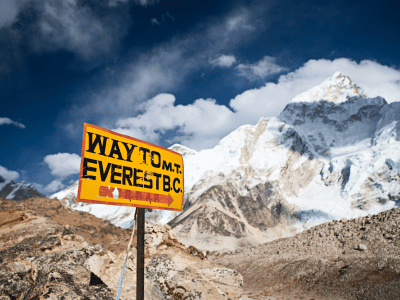
An early start is essential to reach Gorak Shep (5,140 m/16,864 ft). As you trek, you’ll be treated to breathtaking views of the surrounding peaks, especially as the trail proceeds alongside the glacier, passing the junction leading to the Italian Research Centre pyramid and crossing the snout of the Changri Shar Glacier. Kala Patthar, known as the “black rock,” is prominently visible ahead, while Gorak Shep, marked by a cluster of teahouses beside a small lake, awaits. You will head straight to Gorak Shep to unload your gear. Take this opportunity to rest and monitor for signs of altitude sickness before you continue to Everest Base Camp (5,364 m/17,598 ft). The trek to the base camp takes several hours, winding through ice pinnacles and navigating the crevasses of the Khumbu Glacier. As you near Everest Base Camp, the formidable Khumbu Icefall comes into view on your right, appearing much more intimidating than from other vantage points. Since most expeditions prefer privacy and security at their camps, it’s important to respect their space and avoid wandering through the camp areas uninvited. On your return, consider taking a higher route for a stunning view of the Khumbu Icefall and the path to the South Col. You’ll end the day back at Gorak Shep. Upon arrival in Gorak Shep, settle into a cozy tea house, enjoy a warm meal, and relax after your journey.

D12

Time

5-6 hours

Max Altitude

5545 m

Early in the morning, you begin your ascent to one of the most iconic viewpoints in the Everest region, Kala Patthar (5,550 m/18,209 ft). From the teahouse at Gorak Shep, head north by northeast, climbing towards a rocky summit draped with prayer flags. The trail is steep, so you will take it at a steady pace to comfortably reach the summit. Once at the top, the views are unmatched. This spot offers one of the most breathtaking views of Mount Everest, the tallest point on earth, along with the majestic peaks of Nuptse, Lhotse, and Pumo Ri. Mount Everest (8,848.86 m/29,031.69 ft) stands magnificently, offering an up-close glimpse of its towering peak. Lhotse (8,516 m/27,940 ft) is also visible, showcasing its dramatic southern face, while to the southwest, the rugged ridges of Nuptse (7,855 m/25,771 ft) provide a striking contrast. The distinctive pyramid shape of Pumori (7,161 m/23,494 ft) rises to the west, enriching the panoramic scenery. You can also admire Lintren (6,713 m/22,024 ft) and Khumbu Tse (6,639 m/21,782 ft), adding to the incredible mountain tableau. The surrounding glaciers and peaks complete this awe-inspiring view, making Kala Patthar one of the finest vantage points in the Everest region. After spending time on the summit, you will descend back to Gorak Shep. The return journey to Gorak Shep along the same trail takes approximately 45 minutes. From there, you continue your descent, taking around two more hours to reach Lobuche.  Upon arrival in Lobuche, settle into a cozy tea house, enjoy a warm meal, and relax after your journey.

D13

Time

5-6 hours

Max Altitude

4830 m

Descend from Lobuche towards Dughla, and just before crossing a stream, take a right turn. The path leads across a flat area and then climbs steadily up a grassy hillside. As you ascend, you’ll have expansive views stretching out towards Pheriche and beyond. The trail continues with a gentle climb, following the natural contours of the hillside. Below, the turquoise waters of Chola Tsho (4,590 m/15,059 ft) glisten beneath the rugged peaks of Cholatse (6,423 m/21,073 ft) and Arakam Tse (6,423 m/21,073 ft). After crossing another stream and ascending a small rise, you’ll reach the teahouses of Dzongla (4,830 m/15,846 ft). Upon arrival in Dzongla, settle into a cozy tea house, enjoy a warm meal, and relax after your journey.

D14

Time

8-9 hours

Max Altitude

4800 m

The trail loops over the grassy hill behind Dzongla, leading gradually up through a large meadow toward a rocky bluff near the valley’s end. The path winds up a series of switchbacks, reaching a rock face before climbing rightward along a boulder-strewn trail. You’ll pass smooth rock slabs dotted with cairns, close to a glacier. Stay to the south side of the glacier on a trail often covered with snow, crossing the glacier just before reaching Cho La (5,368 m/17,612 ft). Although the highest peaks aren’t visible, the western horizon is filled with smaller but still impressive mountains. The descent from the pass is steep and rocky, with snow and ice covering parts of the trail. Be cautious as you descend, especially since the lower section is prone to rock-fall from a craggy peak on your left. Within an hour, you’ll reach a gentler gradient, cross a minor ridge covered in boulders, and find a good campsite nestled in a trough. From here, a grassy hill on the far side leads to a large boulder, followed by a long, steep descent down to the teahouses and campsites of Dragnag (aka Thangnak, 4,700 m/15,420 ft). Of all the glaciers in the Everest region, the Ngozumba Glacier stands out as the most impressive. To cross it, follow the trail to the west of Dragnag (4,700 m/15,420 ft). The glacier offers breathtaking views with turquoise lakes reflecting the surrounding mountains. Once you’ve crossed to the far side, turn north and merge with the main Gokyo trail just before reaching a large lake. From there walk along the trail to Gokyo (4,790 m/15,715 ft), situated on the east bank of yet another stunning lake. Upon arrival in Gokyo, settle into a cozy tea house, enjoy a warm meal, and relax after your journey.

D15

Time

3- 4 hours

Max Altitude

5357 m

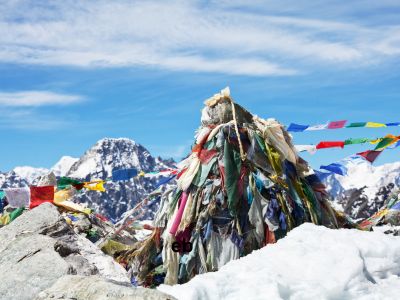
Today you’ll have a rest day with an exciting hike up Gokyo Ri (5,357 m/17,575 ft), which stands tall on the northern side of the lake. The path to Gokyo Ri is quite rough and eroded at the lower part, but it soon turns into a solid ridge trail leading up to the summit at 5,357 meters (17,575 feet),. The summit, adorned with prayer flags and rocky terrain, provides one of the most spectacular views of Mount Everest and the surrounding peaks in the entire region. As you climb, the breathtaking peaks of Everest, Lhotse, and Makalu gradually come into view. The summit of Gokyo Ri offers one of the best views in the Everest region, often said better than rival Kala Patthar. From the top, the view stretches across an incredible array of Himalayan peaks and landscapes. To the northeast, Mount Everest (8,848.86 m/29,031.69 ft) commands the horizon with its towering presence. Eastward, the dramatic face of Lhotse (8,516 m/27,940 ft) adds to the stunning scene. Makalu (8,463 m/27,766 ft), with its pyramid-shaped summit, stands out to the east, while Cho Oyu (8,201 m/26,906 ft) showcases its snow-covered slopes to the north. Beneath the summit, the expansive Ngozumba Glacier spreads across the landscape, creating a stunning glacial view. The vibrant turquoise Gokyo Lakes, nestled directly below, add a beautiful contrast to the rocky and snowy surroundings, completing this awe-inspiring panorama. The descent back to Gokyo will take approximately an hour. Upon arrival in Gokyo, settle into a cozy tea house, enjoy a warm meal, and relax after your journey.

D16

Time

6-7 hours

Max Altitude

5360 m

From Gokyo, head toward the base of the Gokyo Ri climb, but instead of going uphill, take the left-hand path that circles the lake. There are two trails—avoid the one close to the lakeshore and instead follow the one that climbs slightly. Then you’ll arrive at the base of a steep switchback trail. The ground here is loose, and the climb is steep, taking roughly another hour to reach the top. As you ascend, the gradient eases and the trail crosses a rocky section, which can be icy between December and March. You then enter a broad valley, which makes an ideal high camp for those with tents. The path continues west across the valley, climbing once more around a rocky spur before reaching Renjo La (5,360 m/17,585 ft) via a stone staircase. The trail is now easier to follow. On the western side of the pass, the well-maintained stone staircase offers one of the best views in the entire Solu-Khumbu region. The descent on the western side quickly leads to the edge of a glacial lake, where the stone steps end. Beyond this, you’ll find another lake, Relama Tsho (4,905 m/16,093 ft). A wide trail loops around the eastern side of a hill above the lake before descending to a large, sandy kharka. At the kharka’s end, the trail drops quickly into the Bhote Kosi valley, and then, you’ll reach the few teahouses at Lungdhen (aka Lumde, 4,380 m/14,370 ft). Upon arrival in Lingdhen, settle into a cozy tea house, enjoy a warm meal, and relax after your journey.

D17

Time

3-4 hours

Max Altitude

4400 m

From Lungdhen, an easy trail descends to a bridge at the village of Marulung (4,210 m/13,812 ft). Marulung has a few more teahouses where you can take a break. After crossing the Bhote Khosi River, you continue descending on the western bank along a broad, well-marked trail. Then, you will reach Thame (3,800 m/12,467 ft), a village with several teahouses nestled beyond a large moraine topped with stupas. It is worth climbing the moraine and following a trail through juniper and fir forests to Thame’s major gompa, located at the entrance of a small valley west of the village. This gompa hosts the Mani Rimdu festival in May. Upon arrival in Thame, settle into a cozy tea house, enjoy a warm meal, and relax after your journey.

D18

Time

7 hours

Max Altitude

4400m

From Thame, the trail descends toward the Bhote Kosi River, where you’ll cross a steel bridge at the mouth of a canyon carved by the river. This area is considered sacred by locals, and the cliffs above the bridge are adorned with images of Buddhas and prayer inscriptions. After crossing, the trail ascends briefly before settling into a gentle descent leading to Thamo (3,480 m/11,417 ft). From there, you’ll cross the Thesbu Khola and continue along a wide path through peaceful pine forests. Then, you will arrive at Namche Bazaar (3,440 m/11,286 ft), with colorful mani stones dotting the hillside on the town’s western side. Upon arrival in Namche Bazaar, settle into a cozy tea house, enjoy a warm meal, and relax after your journey.

D19

Time

6-7 hours

Max Altitude

2845 m

On this day, the trek follows the Dudh Koshi River back down to Lukla (2,840 m/9,318 ft). As the journey comes to an end, the evening calls for a celebration. You gather with your Sherpa guides and porters to mark the occasion, sharing laughter, and even trying a few Sherpa dance moves. It’s a joyful conclusion to a memorable adventure, leaving you with fond memories and a smile.

D20

Time

Fly 15 Minutes and Drive 4 to 5 Hours

Max Altitude

1,340 m

With the trek behind you, the day starts early as you head to the airstrip for a short flight (15 min) back to Ramechhap (494 m/1,620 ft). From there, a private vehicle will take you on a scenic drive to Kathmandu (1,340 m/4,396 ft) in 4 to 5 hours. The rest of the day is yours to enjoy as you please. You might want to do some last-minute shopping, pack for your journey home, or take a relaxing stroll through Thamel, a lively tourist hub.

D21

Time

N/A

Max Altitude

N/A

Our team will accompany you to the airport for your journey back home. If you wish to extend your stay, there are plenty of exciting options like jungle safaris, white-water rafting, a tour of Tibet (Mount Kailash), or even mountain biking adventures. Feel free to ask us for details!

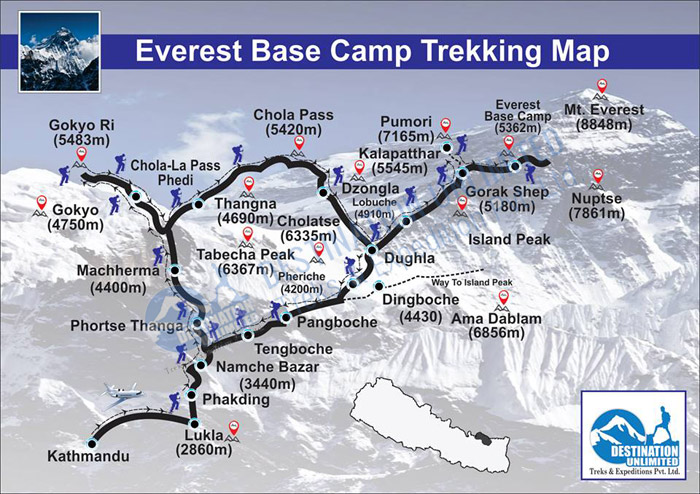
Route Map

trip route map for Everest Three Passes Trek

Fixed Departure

Frequently Asked Questions

The Everest Three Passes Trek is a challenging trekking route in the Everest region of Nepal that crosses three high mountain passes: Kongma La Pass (5535m), Cho La Pass (5420m), and Renjo La Pass (5360m). It is known for its stunning Himalayan views, diverse landscapes, and cultural experiences.
The trek typically takes around 16-18 days, depending on the itinerary and trekking pace. This duration allows for acclimatization, exploration of key highlights like Everest Base Camp and Gokyo Valley, and crossing all three high passes.
The best times to trek the Everest Three Passes are during the spring (March to May) and autumn (September to November) seasons. These months offer clear skies, mild temperatures, and excellent visibility for mountain views.
The Everest Three Passes Trek is considered challenging due to its high altitude and demanding terrain. Trekkers should have previous trekking experience, good physical fitness, and be prepared for long days of trekking with steep ascents and descents.
Engage in regular cardiovascular exercise, strength training, and practice hiking with a backpack. Acclimatize properly during the trek and ensure you are in good health before starting.
You will need the following permits: Sagarmatha National Park Permit TIMS (Trekkers' Information Management System) card Gokyo-Ri Permit (sometimes included with the Sagarmatha National Park Permit)
Tea houses and lodges along the route provide basic accommodation. Rooms are often shared, and facilities may be rudimentary, especially at higher altitudes. Some luxury lodge available on extra costs.
Tea houses offer a variety of meals, including traditional Nepali dishes (like dal bhat), pasta, noodles, soups, and snacks. Food quality can vary, and prices increase with altitude.
Acclimatize properly by taking rest days, staying hydrated, and ascending gradually. Be aware of symptoms of Acute Mountain Sickness (AMS), such as headaches, nausea, and dizziness. Consider carrying medication like Diamox.
While it's possible to trek solo, it's safer to go with trekking agency or hire a guide and porter. They can assist with navigation, carrying gear, and responding to emergencies.

Traveler Reviews

Verified customer feedback

DL

David Laurent

Jul 20, 2025

"This trek redefined what I thought possible. Each pass offered unique perspectives - Kongma La's rugged isolation, Cho La's glacier crossing, and Renjo La's breathtaking Gokyo vista. The acclimatization schedule was perfect, allowing us to comfortably reach all three high passes. Our team's knowledge of weather patterns and route conditions was invaluable. Highlights included the turquoise Gokyo Lakes and sunrise from Chukhung Ri. The varied terrain kept every day interesting, from lush valleys to high alpine deserts. While physically demanding, the sense of accomplishment was unparalleled. For serious trekkers, this is the ultimate Everest circuit."

LB

Lucas Bergman

Jul 20, 2025

""The Ultimate Himalayan Challenge!" Crossing Kongma La, Cho La, and Renjo La was tougher than I imagined, but the views were absolutely worth it! The Everest region from different angles was breathtaking. Our guides kept us safe through the tricky passes. Loved the quiet trails on the less-visited Gokyo side. Not for beginners, but perfect for adventure seekers wanting the complete Everest experience."

How was your experience with us?

★ ★ ★ ★ ★

Related Packages

You May Also Love And Like
Manaslu Circuit Trek
Manaslu Region
(4.9 /5.0)
clock 16 days
From: $1445
Langtang Valley Trek
Langtang Region
(4.9 /5.0)
clock 11 days
From: $821
Everest Base Camp Trek
Nepal
(4.9 /5.0)
clock 16 days
From: $1700
Annapurna Circuit Trek
Annupurna Region
(4.9 /5.0)
clock 13 days
From: $1600
Everest Base Camp Trek Gokyo Chola Pass
Everest Region
(4.9 /5.0)
clock 17 days
From: $1800
Annapurna Base Camp Short Trek - 10 Days
Annupurna Region
(4.9 /5.0)
clock 10 days
From: $665
Nar Phu Valley Trek
Annupurna Region
(4.9 /5.0)
clock 12 days
From: $1800
Mardi Himal Trek
Annupurna Region
(4.9 /5.0)
clock 10 days
From: $685
Ghorepani Poon Hill Trek
Annupurna Region
(4.9 /5.0)
clock 9 days
From: $949
Everest Three Passes Trek
Everest Region
(4.9 /5.0)
clock 21 days
From: $1990
Jomsom Muktinath Trekking
Mustang Region
(4.9 /5.0)
clock 11 days
From: $975
Gokyo Lake Trekking
Everest Region
(4.9 /5.0)
clock 12 days
From: $1395
Khopra Danda Trek
Annupurna Region
(4.9 /5.0)
clock 13 days
From: $1050
Phoksundo Lake Trek
Dolpo region
(4.9 /5.0)
clock 13 days
From: $1500
Great Himalays Footer Website Art